How To Determine Molecular Weight Of A Compound
If you know the molecular weight you know the molar mass. It is this feature that distinguishes chemical compounds from solutions and other mechanical mixtures.

Difference Between Molecular And Structural Formula Definition Uses Calculation And Differences Structural Formula Molecular Organic Molecules
For example every water molecule contains two atoms of hydrogen and one atom of oxygen.

How to determine molecular weight of a compound. 2 Molecular weight of hydrated sodium carbonate. The concentration of the solution was determined to be 00366 M. Computed by Cactvs 34818 PubChem release 20210507.
31 Membrane molecular weight cut-off. The empirical formula is the simplest formula of a compound. Next divide the molecular weight by the empirical formula weights to come up with a ratio.
What are the empirical and molecular formulas for a compound with 8688 carbon and 1312 hydrogen and a molecular weight of about 345. In the case of water multiply the atomic weight of hydrogen by two and the atomic weight of oxygen by one then add the products. B and 80 wt.
To find a molecular formula start by calculating the number of moles and the molecular weight of the gas using their respective formulas. The molecular weight of the compound determines the mass of 1 mole of the specific substance and the number of grams per mole of the compound. Snyder in Contaminants of Emerging Concern in Water and Wastewater 2020.
MWCO is widely used to estimate organic molecule rejections but it does not. Mass of the compound molecular weight of the compound. Empirical data on the molecular weight of a compound depends on the size of the molecule in question.
Molecular weight is the mass of one molecule of a substance while the molar mass is the mass of one mole of a substance. The related quantity relative molecular mass as defined by IUPAC is the ratio of the mass of a molecule to the unified atomic mass unit also known as the dalton and is. And for each compound they all have a molecular formula but some can be similar and those are called isomers which are common in organic chemistry.
At 0 o C 0454 kg-mole of. Annals of Internal Medicine 1991. Property Name Property Value Reference.
The MathMol Library of Molecular Structures contains GIF PDB and 3-D VRML files of molecules that are found in most introductory biology and chemistry textbooks eg water and ice carbon hydrocarbons amino acids nucleotides lipids sugars photosynthetic pigments and drugs. Therefore in order to determine the molecular weight and molecular weight distribution of a polymer one of the most widely applied methods is gel-permeation chromatography. It might seem obvious that molecular weight is an essential property of any molecular compound.
The percent composition of a compound can be measured experimentally and these values can be used to determine the empirical formula of a compound. Determine the formula of hydrated sodium carbonate. Its molecule formula is 2 X Y 2 X 2 Y 4.
What are the empirical and molecular formulas for a compound with 83625 carbon and 16375 hydrogen and a molecular weight of 38878. The ratio of the numbers of atoms that can be bonded together to form molecules is fixed. Its vapour density is equal to its empirical formula weight.
A randomised trial comparing low molecular weight heparin with standard unfractionated heparin. A 15 wt. Numerically this would be 21008 11600 18016.
From a more technical perspective you are actually multiplying the mass in grams by the mole ratio per atomic weight. Molecular weight is one of the most central aspects of polymer properties. Different molecules of the same compound may have different molecular masses because they contain different isotopes of an element.
Do so by dividing the mass in grams for each element by the elements respective atomic weights. The number of moles represents the fraction. In a molecular formula it states the total number of atoms of each element in a molecule.
Therefore the unit of molecular weight. Lets assume that the molecular. It has units of grams per mole.
The molecular mass or molecular weight is the total mass of a compound. The actual formula is an integral multiple of the empirical formula. Gel permeation chromatography GPC is a term used for when the separation technique size exclusion chromatography SEC is applied to polymers.
Composition 5 wt. Divide the mass of each element found in one mole of the compound by the total molar mass of the compound. Molar mass of K 391 g Molar mass of Mn 549 g Molar mass of O.
If the constants are unknown or the polymer has a complex structure eg branched a copolymer or mixture of polymers size. The process tank is in service 200 daysyear. Google Scholar Warkentin TE Levine MN Hirsh J Horsewood P Roberts RS Gent M et al.
13 Note that MWCO is a molecular weight in which 90 of compound is rejected. The percent composition of a compound is calculated with the molecular formula. Of course all molecules have molecular weights of their own.
From the periodic table the molar masses of the compounds will be extracted. Thus hydrogen and oxygen may be present in any arbitrary proportions in mechanical mixtures but. To determine the molecular ratio of elements in the compound you need to convert the amount of each element from grams to moles.
The molecular mass m is the mass of a given molecule. Minkyu Park Shane A. 00366 molL 500 L 0183 mol.
Volume 0142 m 3 min Temperature 2111 o C. It is equal to the sum of the individual atomic masses of each atom in the molecule. This is the molar mass of the compound.
To determine its molecular formula you have to do an experiment to find its molecular molar mass. To convert grams to moles the molecular weight of the solute is needed. If the polymers MarkHouwink constants K and a in the solvent are known size-exclusion chromatography can be applied to determine the polymers average molecular weight and molecular weight distribution 47.
In polymers molecular weight takes. So the molecular weight is twice its empirical formula weight. 1 Moles of hydrated sodium carbonate in 500 liters.
Molar Mass Molecular Weight - The term mole also referred to as mol was first used by Ostwald in 1896. A compound of X and Y has the empirical formula X Y 2. Its easy to find the molecular mass of a compound with these steps.
Calculate the annual release of chemical A in terms of molecular weight and pressure of vent. Mass spectrometry is commonly used to find the molecular mass of small to medium-sized molecules. The weight of larger molecules and macromolecules eg DNA proteins is found using light scattering and viscosity.
In other words the molar mass is the total mass in grams of all the atoms that make up one mole of a given molecule. The molar mass of any substance can be calculated whose chemical formula is given. The molecular weight is twice its vapour density.
The mass in g of 1 mole of a substance is known as the molar mass or molecular weight of the substance. 520 g 0183 mol 284153 gmol. The units for molecular mass are given in atomic mass units while the units for molar mass are give in grams per mol.
How Molecular Weight Is Determined. It is measured in daltons Da or u. Computed by PubChem 21 PubChem release 20210813 Hydrogen Bond Donor Count.
For example the molecular formula of glucose is C_6H_12O_6 and we do not simplify it into CH_2O. 3 Mass of water in one mole of hydrate. NF membrane possesses molecular weight cut-off MWCO ranging from 200 Da tight to 500 Da loose.
Problem 5 will be solved step-by-step and only the answer for example 6 will be given. Then add together the atomic weight of each of the atoms in the formula which you can find using the periodic table.

Difference Between Empirical And Molecular Formula Infographic Chemistry Basics Chemistry Study Guide Chemistry Education

Difference Between Formula Mass And Molecular Mass Definition Calculations With Examples Chemistry Lessons Teaching Chemistry Chemistry Education

Chemistry Flip Notes Percent Composition Empirical And Molecular Formulas Molecular Chemistry Formula

Calculating Molar Masses Chemistry Classroom Teaching Chemistry Chemistry Lessons

Chemistry Lesson Identifying Ionic Vs Molecular Compounds Chemistry Lessons Chemistry Worksheets Chemistry

Molar Mass Of Compounds Youtube Molar Mass School Help Molars

Boc Sciences Provides Molecular Weight Calculator Use For Molar Mass Molar Mass Teaching Chemistry Chemistry Lessons

The Empirical Formula Of A Compound Is The Simplest Formula That Gives The Correct Relative Numbers Teaching Chemistry Chemistry Education Chemistry Classroom
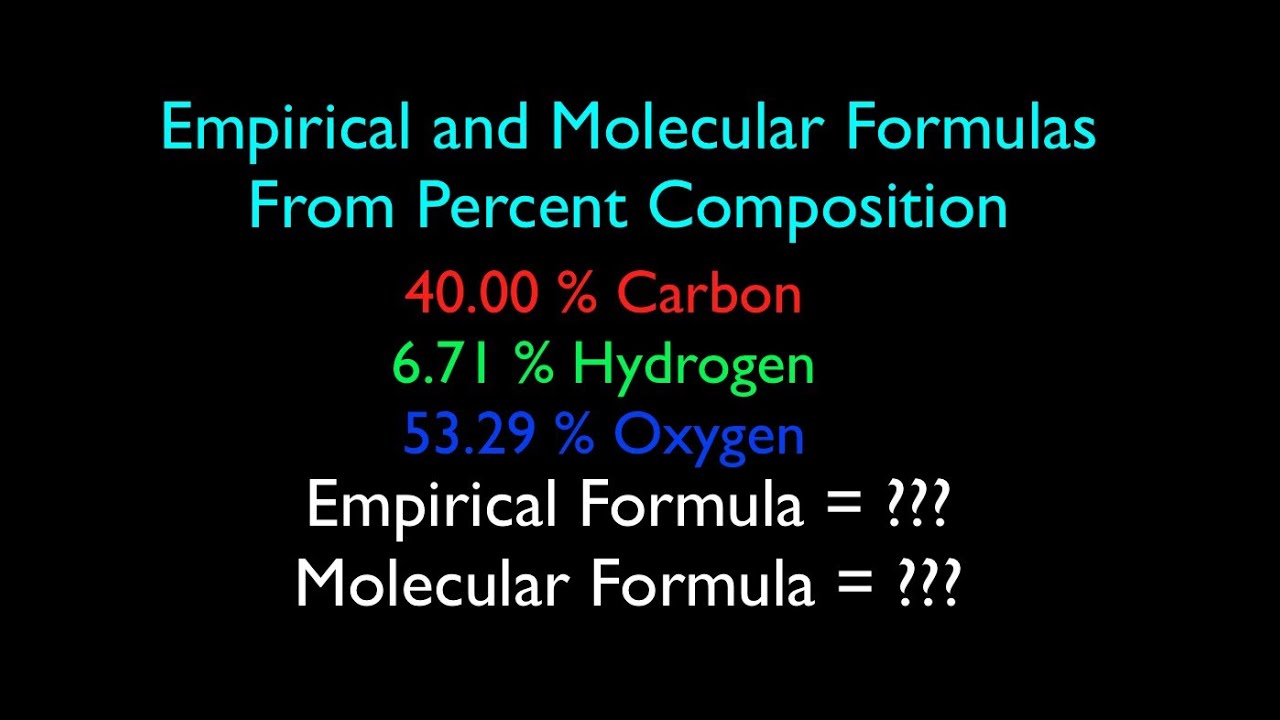
Youtube Molecular Formula Chemistry

Calculating Average Atomic Mass Teaching Chemistry Chemistry Lessons Chemistry Classroom

How To Calculate A Molecular Formula Molecular Chemistry Class Molar Mass

How To Calculate A Molecular Formula Molecular Chemistry Class Molar Mass

Calculating Molecular Formula From Empirical Formula Youtube Great Review Molecular Chemistry Textbook Chemistry Lessons

How To Calculate Molar Mass Molecular Weight Youtube Molar Mass Molecular Mass Chemistry

How To Calculate An Empirical Formula Chemistry Worksheets Scientific Method Worksheet Chemistry Education

Difference Between Molar Mass Molecular Mass Chemistry

Naphthalene Balls Chemical Structure Molar Mass Chemical

Determining Empirical And Molecular Formulas Chemistry Tutorial Youtube Chemistry Education Molecular Chemistry
Unisprint Chemistry How To Write Chemical Formulas Tutorial 100 Steps To Sat Ii Chemistry Teaching Chemistry Chemistry Classroom Chemistry Lessons